MRED vs Zillow: The Real Estate Data War That Could Change Everything
MRED vs Zillow: The Real Estate Data War That Could Change Everything
Zillow became one of the most powerful names in real estate. But without MLS data, professional listing content, agent participation and verified property feeds, even the biggest portal becomes just another website.
For years, Zillow looked untouchable. It became the first place buyers searched for homes, one of the most recognized brands in online real estate, and one of the biggest lead-generation machines the industry has ever seen.
But beneath Zillow’s dominance sits a simple truth most consumers never think about:
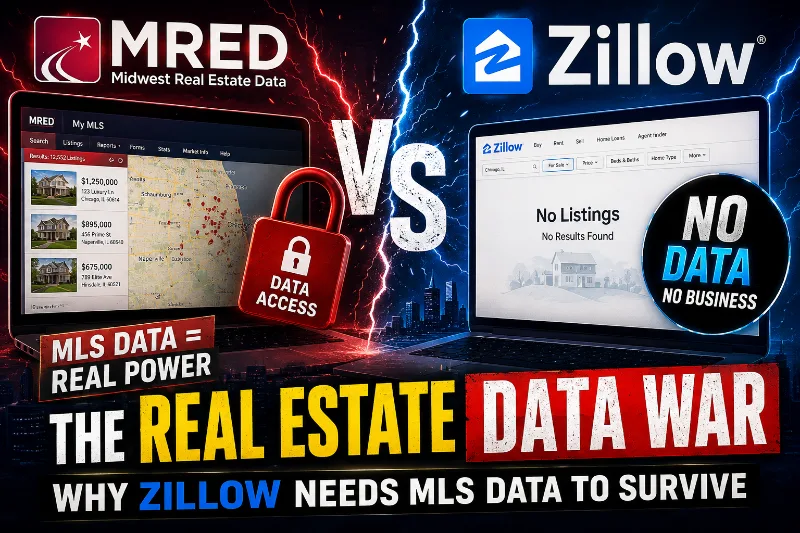
Midwest Real Estate Data, better known as MRED , recently challenged Zillow over the use and display of MLS listing data. The conflict is much bigger than one company or one feed. It represents a growing battle over who controls listing visibility, consumer attention and the future of online real estate.
Zillow Without MLS Data Has No Real Product
Most buyers assume Zillow owns the listings they browse online. In reality, the listing data originates inside MLS systems where agents upload property details, pricing, showing information, descriptions, photography and marketing materials.
Without fresh MLS data, Zillow loses the very thing that makes consumers return: active inventory. No listings means weaker search results, weaker consumer trust and weaker advertising value.
Redfin and Realtor.com Depend on MLS Data Too
This issue extends far beyond Zillow. Redfin also depends heavily on MLS listing feeds to power its search experience and brokerage model.
Meanwhile, Realtor.com was originally viewed by many agents as the “industry portal,” but many brokers now see it as another lead-generation platform competing for visibility and advertising dollars.
The Industry Built Zillow — And It Can Build Something Better
Zillow became powerful because MLS organizations allowed listing data to flow into the platform. Without broker participation and MLS syndication, Zillow never becomes the dominant consumer search brand it is today.
But many MLS platforms still feel technologically outdated compared with modern consumer websites. Some systems feel slow, clunky and visually dated.
That creates a massive opportunity for MLS organizations like MRED to modernize and reclaim more control over the consumer relationship.
MRED Has a Massive Opportunity
A next-generation MLS-powered platform could combine verified listing data with modern technology, luxury branding and a dramatically improved user experience.
Why This Matters for Luxury Real Estate Photography
Luxury real estate photography plays a much bigger role in this ecosystem than most people realize. Buyers emotionally connect with visuals long before they read square footage, tax information or disclosures.
Photographers, agents and brokers collectively create the emotional product portals monetize. Zillow may display the listing, but the listing’s emotional impact begins long before it reaches a portal.
The Industry Is Entering a New Era
The MRED vs Zillow conflict is bigger than a licensing dispute. It is a battle over who controls listing visibility, consumer attention and the future structure of online real estate.
Without MLS data, portals have nothing to display.
Every search result ultimately depends on verified listing data supplied by MLS participants.
Without agents, there are no listings.
Agents and brokers collect property details, market listings and represent sellers.
Without photographers, listings lose emotional impact.
Visual storytelling is what transforms property data into buyer interest.
The Bottom Line
Zillow, Redfin and Realtor.com transformed how consumers search for homes. But their value still depends entirely on listing data supplied by agents, brokers and MLS systems.
The MRED dispute is a reminder that the portal is not the real product. The listing is the product. The photography is the product. The data is the product.
The real estate industry helped build the portals. Now it may finally be time for the industry to build something better for itself.